 Reyes Machinery
2026-01-19
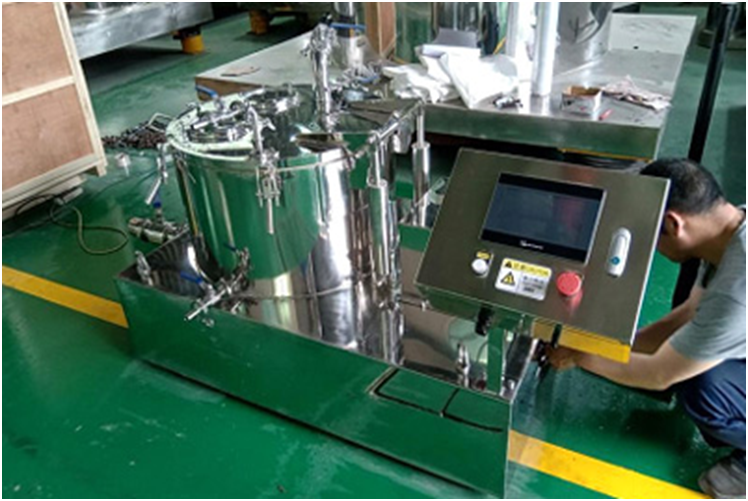
In the modern workplace, separation is no longer just a support function anymore, it's an essential operation that has a direct impact on efficiency, safety, and longevity of the equipment's health. Industries that work with fluid slurries or mixed materials require separation systems that are able to run continuously and without any compromise in the accuracy. This is the reason why an industrial centrifugal separator and an industrial centrifuge become crucial tools, rather than a piece of machines.
Industrial separation has seen a significant change in the past since processes have become more complicated, and the cycles of production are more complex. In the past, systems were generally inefficient and needed frequent interventions by hand, which resulted in increased operational costs and downtime. Nowadays, businesses require machinery capable of working under constant loads, adjust to fluctuating feeding conditions and ensure high quality output.
The centrifugal separator works by spinning the materials at a high speed, so that the heavier components are pushed outwards while lighter parts remain close in the centre. This method allows exact separation, even with fine particles, or emulsified mix-ups that conventional systems are unable to deal with.
However the industrial centrifuge is built to endure long operating durations, high stresses on the rotation as well as fluctuating characteristics of the material with no compromise in safety or efficacy which is why it's suitable for industrial use in critical situations.
The main benefit of centrifugal separation is the ability to exert force several times more powerful than gravity. This dramatically enhances the efficiency and speed of separation. This is particularly important when production issues or contamination could result in risk of safety or financial loss.
Some of the key operational benefits are:
A properly-engineered centrifugal separator ensures an even operation that lowers the amount of mechanical stress and vibration and ultimately results in longer duration of equipment and more smooth process operations.
Industrial processes are not always characterized by the use of uniform materials since most uses involve mixing materials that vary in viscosity, density as well as temperature. An industrial centrifuge is constructed with this variety in mind. It allows it to function with integrity regardless of the feed condition changing abruptly.
The design features that help support this ability include strong rotors, precise-engineered bearings, as well as controlled discharge mechanisms to prevent accumulation of materials. They work in tandem to provide reliable performance when with uneven or heavy load, which is crucial for continuous production environments.
In those systems where the quality of lubrication directly impacts the life of equipment and performance, the oil centrifuge plays an essential role in ensuring the cleanliness of fluids without disrupting operation. Oil that is contaminated can lead to excessive wear, excessive heat, and eventually failure of the equipment that is rotating, making efficient cleansing of oil vital.
In the process of continuously eliminating impure particles and fine particles in the process, the oil centrifuge helps maintain optimal conditions for lubrication, decreases maintenance time, and allows for longer time intervals between service. This is especially beneficial for power generation as well as heavy industrial operations which are prone to downtime.
It is not a result of random chance, but is due to careful design and engineering decisions taken during the stage of development and manufacture. The selection of the material as well as dynamic balancing and thermal resistance are all factors in the degree to which a centrifugal device can perform in the long run.
Critical design considerations include:
A well-designed centrifugal separator maintains its performance indefinitely even after many years of constant operation, as long as it's maintained in accordance with established guidelines.
Security is an absolute necessity in the industrial environment particularly when working with machines that rotate at high speeds. Modern centrifuges come with monitoring tools that are able to detect any abnormal vibrations, temperatures, vibrations, or abnormal conditions prior to them escalating to serious concerns.
An industrial centrifuge intended for continuous use has automatic controls that can adjust operating parameters at a real-time pace to ensure stability without relying on manually-controlled oversight.
Also Read: A Complete Guide to Selecting the Best Top Discharge Centrifuge for Your Business
Maintenance is more than the corrective measure but a long-term method of preserving the effectiveness and extending the lifespan of equipment. Regular inspections, monitoring of condition and proper lubrication procedures can prevent sudden failures and ensure that the separation quality is consistent.
The recommended practices are:
These methods help to keep centrifugal systems to function reliably for extended time periods.
Selecting the best separation equipment will require a thorough understanding of the demands of your process, risks as well as long-term expectations for performance. Reyes Machinery Co Limited brings a blend of expertise in engineering and hands-on experience to provide centrifuge solutions to help support vital industrial processes. It ensures the stability, efficacy as well as dependable performance in a challenging environment.
1. Why are centrifugal separators better than gravity methods?
It uses a lot more force to make separation happen faster and more accurately.
2. Can constant-load industrial centrifuges work?
Yes, if designed for ongoing industrial output.
3. Why is purifying oil important in the operation of rotating machines?
Clean oil decreases wear and tear, increases efficiency and increases the longevity of the equipment.
4. How often should centrifugal machines be checked?
The frequency of inspection will depend on how frequently the equipment is used and operational conditions. However, periodic monitoring is crucial.